The trial and the envois
Painting, sculpture, architecture, engraving and, from 1803, music: the Prix de Rome crowned every discipline. Each winner became a resident of the State, lodged and kept at the Villa for three, four or five years.
In return, he had to send to Paris each year his “envois de Rome” — a copy, a study, a composition — judged by the Academy. Thus were formed David, Ingres and Carpeaux, the architect Charles Garnier, future builder of the Opéra, and the musicians Berlioz, Debussy and Lili Boulanger.
The competition crossed the Revolution, the Empire and the Republic without faltering. It took May 1968 and the will of André Malraux to bring it to an end, in 1968: Jean Marc Lange belongs to one of the very last classes of this almost three-hundred-year history.
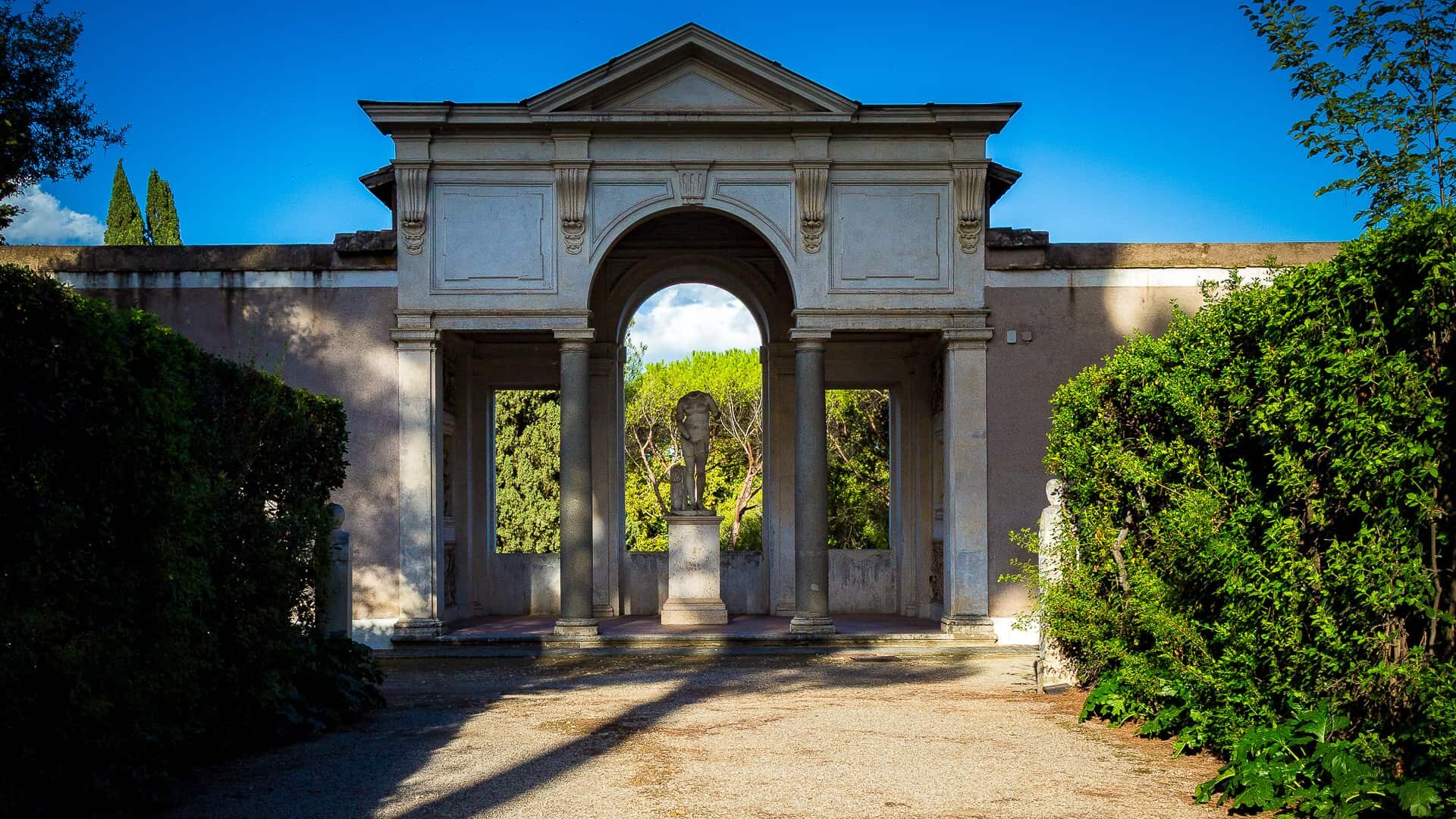
A leafy arch opens the way between two green rooms